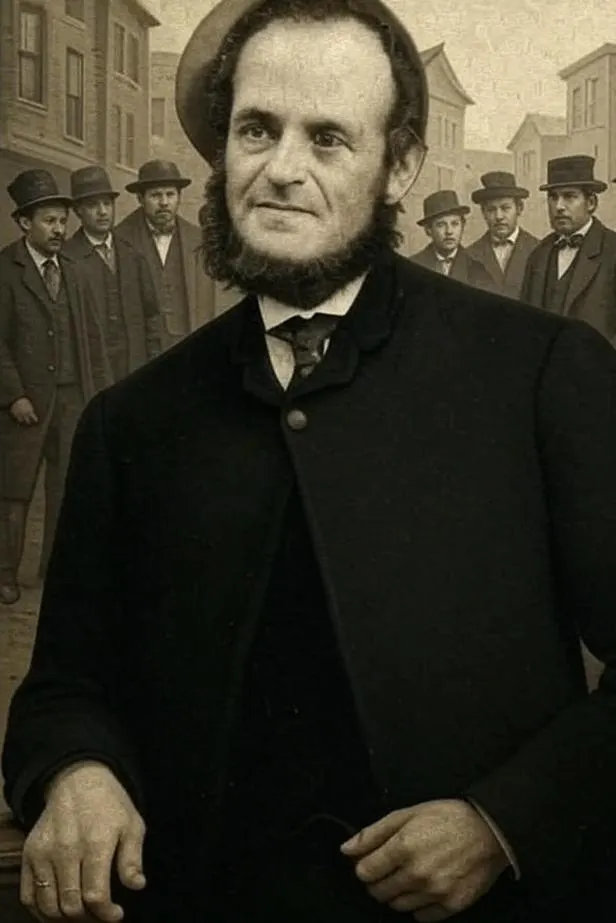
Abraham Ruff Family History
Distant Shores: The Odyssey of Abraham Ruff
Prologue: Shadows of Zurich
On Christmas Day, 1812, Abraham Ruff was born into a Zurich blanketed by snow, the air sharp with the scent of pine and chimney smoke. Switzerland then was a patchwork of cantons, each clinging to its own traditions, languages, and loyalties. Life was slow and deliberate, church bells tolled the hours, and families gathered around hearths to fend off the Alpine chill. For a boy like Abraham, growing up meant learning the rhythms of a cobblestoned city: the clatter of wooden carts, the murmur of German, French, and Italian dialects, and the distant clang of blacksmiths shaping a world on the brink. The early 19th century offered little luxury; most lived modestly, their days dictated by seasons and faith. Yet, beneath this quiet, tensions simmered, Catholic and Protestant rivalries that would soon erupt, shaping the man Abraham would become.
Chapter 1: The Sonderbund’s Shadow
By 1847, Zurich was a city taut with unease. The Sonderbund War loomed, splitting Switzerland between Catholic defenders and Protestant reformers. For Abraham, now 34, life was a blend of labor and risk. He likely lived in a narrow, timber-framed house, its walls echoing with the shouts of political rallies outside. The air carried the tang of gunpowder and the sour sweat of fear as militias drilled in the streets. Markets buzzed with whispered conspiracies, and taverns overflowed with men debating over mugs of dark ale. Abraham backed the Catholic Sonderbund, he felt the weight of dwindling coins as he funded their cause. When war broke in November, cannon fire rumbled through the valleys, and blood stained the snow. Defeat came swiftly, and with it, the sting of betrayal and loss, now being chased for murder meant he had only one option, to flee. Fleeing meant abandoning a life of woolen coats and hearty stews for the unknown, his breath fogging in the frigid night as he slipped away alone.
Chapter 2: London’s Tempest
London in late 1847 was a beast of a city, its streets choked with coal smoke and the cries of costermongers. Abraham arrived amid the din of horse hooves and factory whistles, the Thames a sluggish ribbon of filth. Life here was raw, tenements sagged under the weight of families crammed into damp rooms, their days spent dodging cholera and scavenging for bread. For a newcomer like Abraham, survival meant navigating a labyrinth of accents and alleyways, his Swiss roots masked by a cautious tongue. The winter bit hard, with fog so thick it swallowed gaslights, and hunger gnawed at the poor. By March 1848, the Trafalgar Square Riots ignited this tinderbox. The square pulsed with the heat of bodies and the crack of breaking wood, the air thick with dust and defiance. Abraham, while walking was caught in the melee, he felt the adrenaline of rebellion, destruction by the youth at hand. Arrested (the Metropolitan Police records of the riot list "Abraham Ruff, 30, Discharged" among the 127 people arrested between 6 and 8 March; see libcom.org and Past Tense), he endured the dank chill of a cell, the clank of iron bars a stark reminder of his fragility. Released, after the judge realized he could barely speak a word of English, or so he came across. Abraham soon after met and married Ann Gorman Eveson/Erison on 13th February 1849, their modest wedding a flicker of warmth amid London’s gray sprawl, her Irish lilt a balm to his restless soul. Ann became pregnant and gave birth to Louis Andrew Ruff on 28 May 1851 at 11 Pickard St, Finsbury.
Chapter 3: The Voyage of the Lord Delaval to Australia
The Lord Delaval was a wooden sailing ship and a fragile hope, its decks groaning under 700 tons of cargo and dreams. In September 1852, Abraham, Ann, and infant Louis stepped aboard, the salt air stinging their faces as England faded. Life at sea was a trial of endurance, the cabins reeked of unwashed bodies and tar, while storms tossed the ship like a toy, the horizon a relentless tease. Steerage passengers like them cooked meager meals on swaying stoves, the taste of salt pork and hardtack a daily monotony. Waves roared, and nights were pierced by the cries of the sick or the wails of a child, Louis, frail in Ann’s arms, his arrival to Australia not marked. Sophia Knight, a sprightly 10-year-old, darted among the rigging, her laughter a rare light. For Abraham, the journey was a gamble, his identity rewritten on the manifest as a 32 year old German tallow melter (the Victorian passenger list records Abraham, 32, Ann, 32, and an infant aboard the Lord Delaval under Captain Charles Young), along with his German wife Ann, each day a test of will against the vast, indifferent ocean. Arrival at Port Phillip on the 27th of February 1853 brought relief but no rest; the wagon to Melbourne jolted over rutted tracks, dust coating their throats as they clung to their new world.
Chapter 4: Melbourne’s Candle King
Melbourne in 1853 was a raw frontier, its streets a muddy churn of gold-rush dreamers and opportunists. Abraham soon set up at Queensbury Street, Hotham (North Melbourne). The house hissed with boiling tallow and flickered with candlelight, and the air hung heavy with grease and ambition. Life here was gritty: wooden shacks leaned against brick factories, the Yarra stank of refuse, summers scorched, winters soaked, and flies plagued every meal of mutton and damper. The Ruffs stayed friends with the Knights through these years, and Sophia was now 18. Ann battled on after Louis's death, her hands chapped from the harsh life amid the soot. Abraham thrived. His soap and candles were a lifeline for a city that craved order, though court fines for reckless horses hinted at his impatience with colonial rules. Ann died in 1860 of bronchitis, a cruel echo of London’s damp, and the house fell silent. Sophia comforted Abraham, and on 15 September 1860 she became his bride, bringing new energy to the house, her youth clashing with her parents’ scowls.
The newspapers start to catch glimpses of the household now. On 29 April 1861 a daughter was born at Queensbury Street, Hotham, and the Herald duly announced "Mrs Abraham Ruff, of a daughter" (Herald, 6 May 1861). Sophia and Abraham suffered early losses, little Sophia and Frederick, but by 1863 young Abraham’s cries filled the factory. That October Abraham went looking for capital, advertising in The Argus for a partner in the soap and candle business: "Apply A. Ruff, Queensberry Street" (The Argus, 17 October 1863, page 1). Then a shipment of his candles bound for export sank in Port Phillip Bay, and the insurance didn't cover it because it only took effect once the ship had cleared the Heads. The neighbours had their own complaints. In April 1866 the Inspector of Nuisances summoned Abraham to court (Herald, 27 April 1866), and a tallow works could hardly have smelled sweet. Squeezed for money, Abraham turned to a more profitable sideline: distilling.
Chapter 5: The Distiller’s Gambit
By 1868 Melbourne was a bustling hub of gas lamps and horse-drawn traffic. Behind the soap and candle works in Queensberry Street a still was running, and in May the police came for it. The Gippsland Times reported that Inspector Moody found an illicit still "in full working order" on the premises of Mr A. Ruff, soap and candle maker. As the police came in, one man escaped through a window. They seized a horse and cart, the vats and the spirit, and took Ruff into custody (Gippsland Times, 12 May 1868).
The Herald’s report, under the blunt headline "An Unlicensed Still", gave the details. Inspector George Heath found the distilling plant, about 500 gallons of worts and about 7 gallons of spirits. Then, in a moment of truly bad timing, Ruff himself came back to the premises with a 200-gallon cask of spent wash (Herald, 13 May 1868). One can imagine the look on his face.
Melbourne's papers followed the case closely. Abraham was charged and remanded (The Age, 11 May 1868; Herald, 11 May 1868; The Argus, 11 May 1868), then remanded again (Herald, 12 May 1868). The papers disagree on the penalty. The Herald says he was fined £100 plus £3 3s costs (Herald, 13 May 1868). The Advocate says £50 or six months (Advocate, 16 May 1868). Either way, it was a ruinous sum for a candle maker. Family memory says Abraham sat in the cold lockup, fell ill and was taken to hospital, and that the community held a fundraising concert to pay the fine and set him free.
The fall came fast. Within weeks The Argus listed Abraham among the new insolvents (The Argus, 17 June 1868). His creditors met over the estate (Herald, 25 June 1868), and by September "Abraham Ruff of Hotham, candle-maker" had his certificate (Herald, 12 September 1868). But Abraham was never down for long. In November 1868, six months after the police found his still, he was granted a licence for the Exchange Hotel in High Street, St Kilda (Telegraph, St Kilda, 28 November 1868). The illicit distiller had become a licensed publican. Soon Sale beckoned, a quieter canvas for his restless spirit, at the end of a dusty trek through eucalyptus-scented wilds.
Chapter 6: Sale’s Maverick
Sale in 1869 was a speck of civilisation, its wooden storefronts dwarfed by endless plains. Abraham’s soap vats bubbled again and the air was thick with lye and promise, while Sophia stitched clothes by lamplight, her hands rough from toil. Abraham sold his soap-making recipe for 100 pounds to J. Kitchen & Sons, who were then buying up the smaller soap and candle makers of Victoria. It became the famous Velvet Soap. Life was simpler but harsh: dust storms coated everything, and summers baked the earth to iron.
Abraham hadn't lost his talent for brushes with the law. The Sale bench fined him 5s plus 5s costs in 1871 (Gippsland Times, 22 August 1871). In 1880 he was charged with cutting timber on the common (Gippsland Times, 21 April 1880). In 1883 the tables turned, and he appeared as the prosecutor after someone stole his gloves (Gippsland Times, 23 July 1883). In 1889 came another 5s fine (Gippsland Mercury, 13 April 1889). In 1892, at nearly 80, he was fined 2s 6d for not sending a child to school (Gippsland Times, 30 March 1892). Family memory adds unpaid rates and petty debts to the list. There was happier news too. In 1881 the Gippsland Mercury announced the marriage of Sophia, "eldest daughter of Abraham Ruff, formerly soap and candle manufacturer of Queensberry Street, Hotham", to Richard Kereday, son of the late Rev. John Kereday of Tasmania (Gippsland Mercury, 2 June 1881). Twenty years on, the papers still remembered the candle business.
The Notre Dame de Sion Convent garden gave him some peace, and he spoke French to the nuns in their own tongue, their habits rustling like whispers of Zurich. Abraham and Sophia adopted Arthur and Solomon while raising their own 8 children, which tied them to Sale, the boys' voices an echo of his own lost sons. Arthur died fighting at Gallipoli in 1915.
Chapter 7: Death by The Hounds and Redback Spider
By the 1890s Sale had settled into a rhythm, its streets alive with the clop of hooves and the chatter of settlers. Abraham, stooped and grey now, tended the convent’s roses, their scent a passing comfort against the aches of age. Then a pack of greyhounds attacked and brought him down. Death came gently. The Gippsland Times family notices recorded it simply: "RUFF.—On the 19th December, at Pearson-street, Sale, Abraham Ruff, aged 86 years" (Gippsland Times, 22 December 1898). The Sale Cemetery register places him in Section 3, Row V, Lot 10, and names his parents as Abraham Ruff and Ann Banker (Sale Cemetery register). His widow lived on until 1911. Family memory says a redback spider bit her at the woodpile in her last days. In October 1911 the Gippsland Times reported her death at 69, "relict of the late Abraham Ruff", and named her as the mother of Abraham, Sophia, Henry Edward, Bertha and others (Gippsland Times, 16 October 1911). Abraham’s life was a flame that flickered across continents, fed by courage and cunning: Zurich’s Sonderbund War, London’s Trafalgar Square riots, Melbourne’s gritty early days, a police raid, a St Kilda pub and a long Gippsland old age. He carved a path through a world of constant change and left a legacy of tales that inspired his descendants to chase their own distant shores.
Chapter 8: A Legacy in Flour and Flame
The legacy of Abraham Ruff, the restless wanderer from Zurich, did not fade with his passing in 1898, nor with Sophia’s in 1911. It lived on in their children, a brood of ten, though marked by the early losses of Sophia Emily Agnes and Frederick Edward, who carried the family name through the rugged landscapes of Gippsland. The adopted sons, Arthur Abernethy and Solomon Perdon, added their own threads to the tapestry, though Arthur’s life ended in the muddy trenches of Gallipoli in 1915, and Solomon’s path blurred into the annals of Hotham’s council records. But it was the eldest surviving son, Abraham Ruff Jr., born in 1863, who would etch his own mark on the world, a man of dough and fire, whose life mirrored his father’s grit in a new era. Sale in the late 19th century was a town of dust and determination, its streets lined with weatherboard shops and the scent of eucalyptus heavy in the air. Young Abraham, at just three years old, had jolted into this world on a wagon from Port Albert, the creak of wheels and the tang of salt air his earliest memories. The family’s modest home on York Street hummed with the clatter of Sophia’s cooking and the laughter of siblings—Henry, Edward, Bertha, Rosa Bona, Frederick, and Ida Violet joining the fold over the years. Education was a sparse affair, a few hours in a drafty schoolroom where slates scratched with lessons, but Abraham’s true learning came from the land and the people. He fished in the Thomson River, his bare feet sinking into the muddy banks, and roller-skated on makeshift rinks as he twirled with a grace that would later make him an expert dancer.
At 15, in 1878, Abraham turned his hands to baking, apprenticing under a gruff Sale baker whose ovens roared with the heat of a new day. The work was grueling, kneading dough until his arms ached, the air thick with flour dust and the yeasty tang of rising bread. Sale’s residents, a mix of farmers and shopkeepers, lived on simple fare: damper, mutton, and tea brewed over open fires. Abraham’s bread became a staple, its crusty warmth a comfort in a town where summers scorched and winters brought icy winds off the Gippsland Lakes. By his 20s, he was a master baker, his loaves winning praise at local fairs, their golden tops a testament to his skill.
But life in Sale was not without its perils. On a crisp January morning in 1893, Abraham, now 30, set out fishing with a friend, William Jones. The river, a glassy ribbon winding through the bush, shimmered under the summer sun, its banks alive with the hum of cicadas. The two men rowed a small boat, their laughter echoing over the water, until a sudden lurch overturned their craft. The current seized them, cold and relentless, and Abraham, unable to swim, flailed against the pull. His hands grasped at reeds, the muddy bank a lifeline as he hauled himself ashore, gasping and soaked. William was not so fortunate—his body vanished beneath the surface, a tragedy Abraham reported to the police with a heavy heart, his voice trembling as he recounted the loss. The Melbourne Herald carried the news of the drowning on the Glenarry River near Sale, naming the two young men as Abraham Ruff and William Jones (Herald, 20 January 1893). Hard times followed. Within weeks The Argus listed "Abraham Ruff the younger, of Sale, baker" as insolvent (The Argus, 9 February 1893), echoing his father’s insolvency 25 years earlier. He bounced back as his father had. By September 1895 the Maffra Spectator was reporting that a Maffra business had secured the services of Mr Abraham Ruff of Sale (Maffra Spectator, 26 September 1895).
This brush with death steeled Abraham’s resolve, and he channeled his energy into service. He joined the Sale Fire Brigade, a band of volunteers who battled blazes with leather buckets and sheer will. Fires were a constant threat in Gippsland, where wooden buildings and dry summers conspired to spark disaster. Abraham’s small stature belied his strength—he hauled hoses through choking smoke, his face blackened but his spirit unbowed, earning the respect of his comrades. In 1913, Abraham moved his family to Maffra, a bustling town 20 miles from Sale, after a devastating fire on Christmas Eve tore through Johnson Street. The blaze, fueled by a dry wind, reduced shops from the shire offices to the National Bank to ash, the crackle of flames and the cries of onlookers haunting the night. Abraham, who had cycled the distance between Sale and Maffra each weekend to work, a grueling ride over rutted tracks, the sun beating down or rain soaking his coat, saw the need for action. He founded the Maffra Fire Brigade, becoming its first captain, a role that fit him like a glove. Under his leadership, the brigade drilled with military precision, their boots pounding the earth as they practiced with hand-pumped engines, the tang of smoke a constant reminder of their purpose. Abraham’s baking career flourished alongside his civic duties. His bread, awarded for its quality during the Great War, fed soldiers and families alike, its hearty texture a small comfort amid the rationing and grief of 1914-1918. He baked in Sale, Maffra, Stratford, Bunyip, and Melbourne, each oven a new chapter in a life of movement.
At home, he danced with his wife, Elizabeth Mary Monk, whom he married in Sale, their steps a waltz of joy in a parlor lit by kerosene lamps. They built a house opposite the Agricultural School Farm in Sale, its verandah a perch for watching the world go by, until the move to Maffra in 1913. Abraham’s passions; shooting, fishing, reading, music, filled his days, his teetotaler’s clarity and non-smoker’s vigor a testament to his disciplined nature. Yet loss shadowed his later years. Elizabeth’s death in 1940, after a life shared in laughter and labor, left Abraham hollow, the house in Maffra too quiet without her humming. The deaths of two sons, Edward and Cyril, the latter’s unexpected passing in 1951 a crushing blow, sapped his strength.
By April 1952, as he lay in the Gippsland Base Hospital in Sale, Abraham’s 90 years weighed heavy. His once-steady hands trembled, and his breath came in shallow gasps, but his mind drifted to the river, the bakery, the fire brigade, moments of purpose that defined him. He passed on April 8, surrounded by the whispers of nurses and the distant toll of a church bell, leaving behind sons Will and Theo, daughters Alma and Renee, 16 grandchildren, and 28 great-grandchildren. His siblings, Edward, Henry, Frederick, Sophie, Bertha, and Bona—mourned a brother whose life had burned as brightly as their father’s, while Ida, who predeceased him, waited in memory. The funeral at St. Mary’s Catholic Church in Maffra on April 12 was a quiet affair, the pews filled with family and townsfolk, the air heavy with the scent of incense and the weight of farewell. Abraham Ruff Jr. was laid to rest, a man who, like his father, had lived boldly, his hands shaping bread and dousing flames, his heart a beacon for those who followed.
Read what the newspapers of the day reported about Abraham and his family on the In the Newspapers page.
This is for all the Ruff's who want to know more about our ancestor Abraham Ruff who migrated from Switzerland to England and then Australia. If you have any more info or photos you would like added to this site please send me a message through the chat assistant or the contact form on the Contribute page. Your message comes straight to me privately.
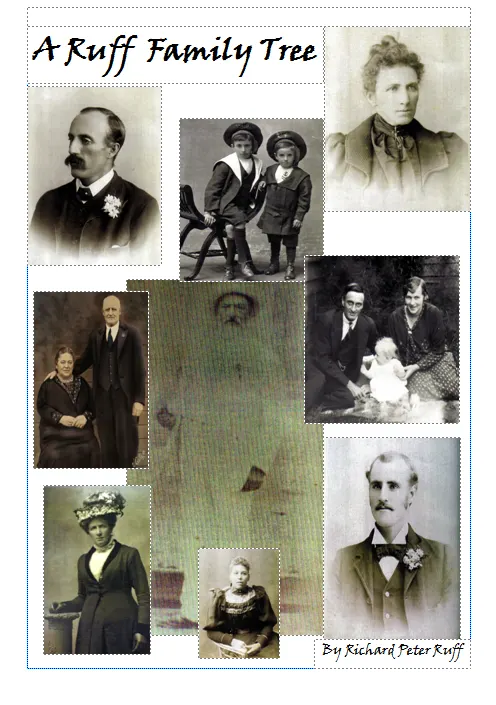
I have taken all due care to respect the privacy of individuals. Information published in the family tree is to be respected. If you believe any information in this website is wrong please inform me with reference material and I will rectify it as soon as possible. Richard Ruff - website manager.